

Hello everyone, I'm a technical advisor for Longer. I've been working with XPS tile backer boards for many years and have dealt with many construction workers from all over. I've noticed that many people choose good boards but fail to do a good job with the installation details, resulting in problems like hollowing, water seepage, and tile detachment later on. It's really a pity. Today, I'll use plain language to explain the installation steps for the ground and kitchen and bathroom walls, as well as the most common mistakes, based on the characteristics of Longer's XPS boards. It's all practical and no nonsense, so even novice workers can understand it at a glance.
I. Preparation before installation: Get all the tools and materials ready, and getting the base right is half the battle.
Don't underestimate the preparation stage. Using the wrong tools or not properly treating the base will make all your efforts in vain later on. Let's keep it simple and avoid using complex professional terms.
1. Essential tools and materials: Don't make do with anything.
The key point is: XPS boards have special adhesives. Don't use ordinary cement mortar! It won't stick well. This is the most basic mistake. Remember it first.
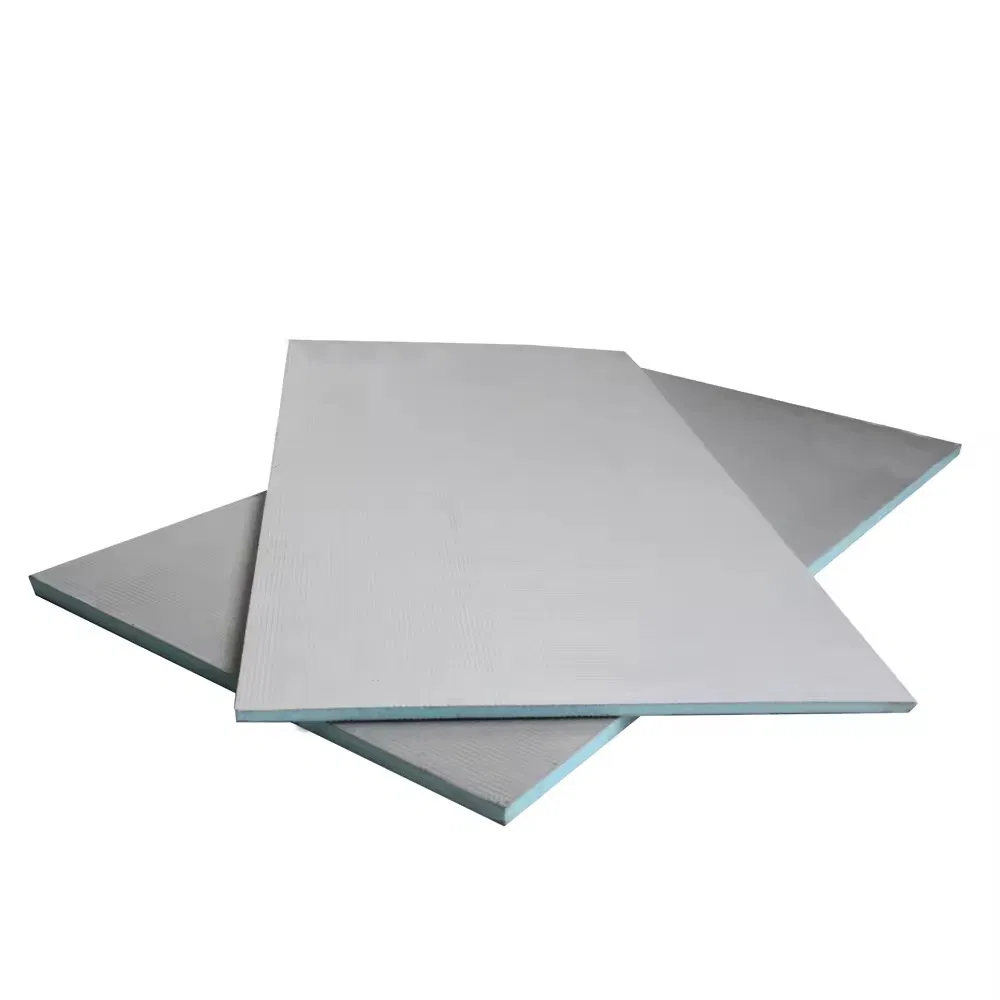
Main board: Longer's 4x8-foot XPS tile backer board. Choose the thickness according to the project. 10mm is sufficient for home decoration and regular construction sites.
Adhesive: Special adhesive for XPS tile backer boards, compatible with the boards, strong and won't damage the boards.
Small tools: A board cutting knife, a tape measure, a level, a rubber hammer, waterproof sealant, and a utility knife are enough. No need for complex equipment.
Fixing parts: Prepare some plastic expansion bolts for wall installation. For wet areas like shower zones, also prepare some stainless steel screws with waterproof washers for extra stability.
2. Base treatment: Just keep it flat and dry. No need to overdo it.
Our XPS tile backer boards have low requirements for the base. They are much easier to handle than cement boards. Just follow these few simple requirements:
Clean the ground or wall, remove any dust or oil stains, grind down any protrusions, and fill in any depressions with cement mortar to make it flat. Don't leave any bumps or holes.
The base must be dry. Don't install it if it's still damp, especially in bathrooms. Do the basic waterproofing first and wait until it's completely dry before proceeding.
Don't worry about the ground's load-bearing capacity. The ground in residential and ordinary commercial areas can usually meet the requirements. No additional reinforcement is needed.
3. Board cutting: Even beginners can do it. It's very simple.
Longer's XPS boards are lightweight and rigid. Cutting them is a breeze. Just use a cutting knife to make a mark along the line and break it off. It's much easier than cutting cement boards.
After cutting, smooth out the small burrs on the edges. Don't leave any rough edges. If you want a stronger bond, lightly brush a layer of special adhesive on the back of the board. This is a small trick that can significantly increase the bonding strength.
II. Ground installation: Three steps to complete - apply adhesive, lay the boards, and seal the joints.
The ground is the most common installation area. The process is the simplest. Just remember to apply the adhesive evenly, lay the boards flat, and seal the joints tightly. That's basically it.
Step 1: Apply the special adhesive. Don't skimp on the adhesive or apply it randomly.
Use a notched trowel to apply the adhesive to the base. A thickness of 3-5mm is sufficient. Make the lines neat and even. Don't apply it in random patches.
Also apply a circle of adhesive around the edges of the board's back. The width should be 5-8cm. This is like a "double-sided stick". This way, the boards won't hollow out after installation. Don't be lazy at this step.
Step 2: Lay the 4x8-foot boards, stagger the joints and leave gaps.
Place the boards with the adhesive evenly and use a rubber hammer to gently tap them to make them adhere to the base. Then use a level to check that they are not crooked. The flatness error should be controlled within 2mm.
Key point: Lay the boards with staggered joints, just like laying tiles. Don't align the joints of adjacent boards. Leave a 2-3mm gap between the boards. Don't install them seamlessly. Leave some space for thermal expansion and contraction. Otherwise, the boards will bulge in hot weather.
Step 3: Seal the joints, especially in kitchens and bathrooms. Don't miss any.
Use waterproof sealant to seal the joints. Pay special attention to kitchens and bathrooms. Don't leave any unsealed joints. When the glue is completely cured, which takes about 24 hours, fill the gaps between the boards with waterproof sealant, making sure there are no air bubbles and no gaps. Also, make sure to seal the edges where the boards meet the walls and pipes. This is crucial for preventing water seepage. Don't think it's a hassle.
Step 4: Once the sealant is dry, which takes about 12 hours, you can directly apply tiles.
Tap the boards to check if they are not hollow or loose. Then, you can directly apply the tile adhesive and lay the tiles. The surface roughness of our XPS boards is just right, so no additional treatment is needed. The tiles will stick very firmly.
III. Installation of Kitchen and Bathroom / Shower Area Walls: One More Step for Fixing, More Effective Waterproofing
Wall installation has the issue of bearing weight, especially in the shower area where there is a lot of water and things to hang. Pay a little more attention to fixing and waterproofing, and it will be fine.
1. Slightly modify the method for different walls
If it's a concrete wall, you can directly apply the glue and lay the boards as you would on the floor, which is convenient.
If it's a light steel keel wall, first fill the space between the keels with some insulation cotton, then add a piece of plywood to the back of the board as a backing, and fix the board to the keel with plastic expansion bolts. The bolts should be spaced about 30 cm apart to ensure the board doesn't fall off.
2. Small details for wall installation, remember them to avoid mistakes
Lay the boards from bottom to top, with staggered joints, just like on the floor.
For walls over 2.4 meters high, add an extra keel in the middle for support to prevent the boards from sagging.
For the shower area walls, after laying the boards, apply a layer of waterproof coating over the entire surface to cover the boards and gaps. This provides double waterproofing and ensures no water seepage.
IV. Three Common Mistakes, All from the Hard-Won Experience of Construction Workers
These mistakes are very common, and although they seem minor, they are very troublesome to fix later. Pay attention during construction and avoid them:
1. Using ordinary cement mortar to stick the boards (the biggest mistake)
Many workers take the easy way out and use cement mortar, but it doesn't stick the XPS boards firmly. After a while, the boards will fall off. Always use the special glue we recommend from Longer. Its bonding strength can reach over 0.8 MPa, which is sufficient for all scenarios. Don't skimp on this.
2. Inadequate sealing of board gaps, leaving gaps or not filling them completely
Board gaps are a major area for water seepage. Either they are forgotten or the sealant is not filled completely, leaving small gaps through which water can seep in.
For wet areas, it is recommended to apply sealant to the board gaps first, and then add a layer of waterproof tape. This provides double protection and you don't have to worry about water no matter how much you use.
3. Not leaving expansion and contraction gaps, causing board bulging
XPS boards expand and contract with temperature changes. Although the movement is not significant, if they are installed without gaps, when it gets hot, the boards will bulge and deform, causing the tiles to crack.
In addition to leaving a 2-3mm gap between the boards, also leave a 5mm gap between the boards and the wall. Fill the gaps with sealant. It's simple and effective.
V. Longer's Exclusive Tips, Double the Construction Efficiency
After years in this business, we have summarized two tips that have been tested in actual construction sites. New workers can use them to work faster and better:
On cold days (below 5°C), preheat the special glue indoors before using it. Don't use it directly outdoors, as it will cure too slowly and affect the construction progress.
For large-scale construction, don't rush. Do it in sections, and check each section as you go. Don't wait until the entire area is done to find problems. It's much more troublesome to fix them then.
In fact, Longer's XPS tile backboards are designed for convenient installation. The high-density extrusion process makes them light, hard, and they come with built-in waterproofing and insulation. They are much lighter than traditional cement boards and can be carried by one worker. The construction efficiency can be increased by 40%.
If you have any questions during the installation process, whether it's about choosing the boards or applying the glue and laying the boards, feel free to contact us. Our Longer technical team will provide one-on-one answers. You don't have to figure it out on your own. Good boards with proper installation can last longer and avoid rework. I hope this useful article can be of help to all the masters!